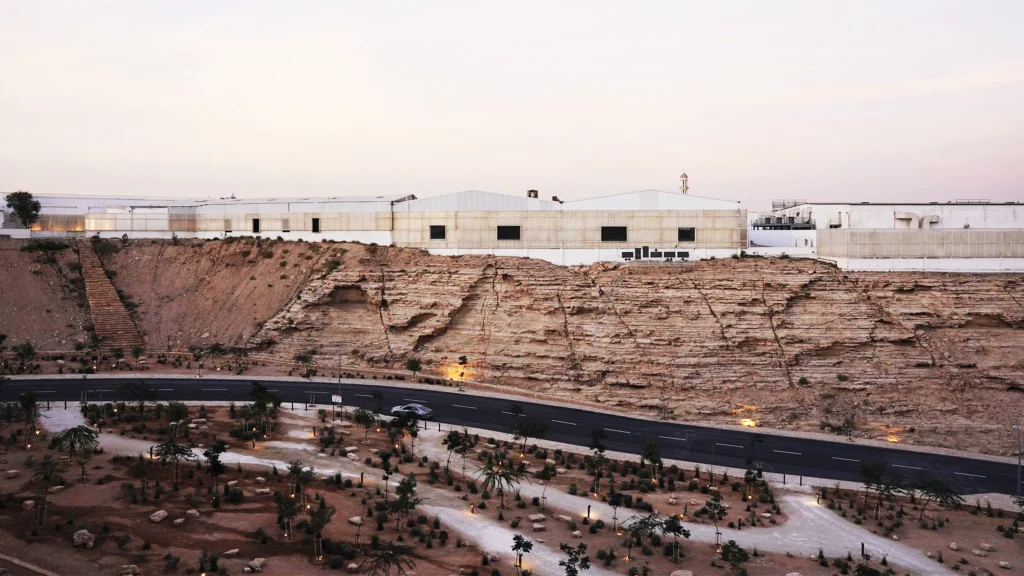
PenguinCube developed an integrated wayfinding strategy for the second edition of the Islamic Arts Biennale at the iconic Hajj Terminal in Jeddah, Saudi Arabia, for the Diriyah Biennale Foundation in collaboration with OMA. The project focused on creating a cohesive visitor journey that connects the wider city approach with the detailed experience of the exhibition itself.
The wayfinding strategy operates across an exceptional range of scales, extending from road navigation as far as 10 kilometres from the venue through to pedestrian circulation within the Hajj Terminal and the identification and labelling of individual art objects. PenguinCube considered how visitors move through the city, arrive at the venue and navigate the exhibition, creating a connected system of spatial communication throughout the experience.
Within the exhibition, the wayfinding system was integrated into OMA’s scenography, ensuring that directional information, spatial orientation and artwork labelling form part of a cohesive visual environment. The approach balances functional clarity with the architectural and curatorial character of the Biennale, allowing signage and information to support the experience without competing with the works on display.
The resulting system creates continuity across every stage of the visitor journey, from arrival and road navigation to pedestrian movement and close engagement with individual artworks. In collaboration with OMA and the Diriyah Biennale Foundation, PenguinCube translated the complexity of a major international cultural event into an integrated wayfinding and spatial communication strategy across the Hajj Terminal.